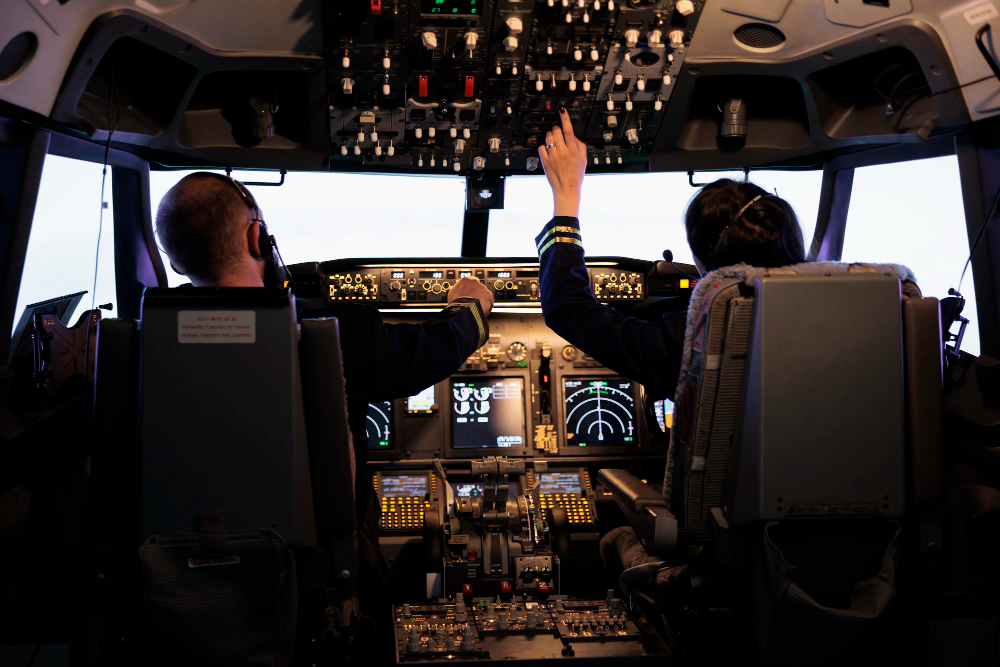
Most of us step onto an airplane, knowing very little on how exactly we’re going to get to our destination. We board the plane, hope the pilots didn’t consume any mini bottles of alcohol before they sat in the flight deck, then arrive at our destination. For flights to get to their intended destination, modern airplane use complex GPS systems to help navigate the plane through the skies. These advanced GPS systems are crucial to the operations of modern aviation.
However, this technology, which is so integral for navigation and safety, is now under threat from GPS jamming. If it sounds scary, believe me, it is. GPS jamming poses a severe threat, not just to the safety of flights, but to the integrity of airline operations around the world. So what can the aviation industry and law enforcement do to counteract this treat? In this article we’ll try to answer just that, and the implications of GPS jamming and how the various sectors are responding to safeguard the skies. So let’s get to it!
GPS stands for Global Positioning Satellite, and it’s a satellite based radio navigation system, that uses satellites to determine location, time, and speed in a given direction. Although owned by the United States Space Force, it can be accessed by anyone with a GPS receiver. It can be found on airplanes, automobiles, and even our smartphones.
Generally, GPS systems are reliable, however on occasion, they may give wrong directions, or send you to the wrong location, like the time I was supposed to head to the Interstate but almost ended up driving straight into a river. Now just imagine, intentionally interrupting a GPS system, and on an airplane no less. Consider for a moment the potential catastrophic consequences that could bring.
Understanding GPS Jamming
GPS jamming is the deliberate blocking or interfering with GPS signals. This can be done by sending strong radio waves that can overwhelm the signals received by the airplane, and disrupt navigation and other critical systems that are dependent on GPS data.
Although GPS jamming is a practice that’s more common in military settings, it unfortunately has found its way into civilian realms, notably aviation, thus creating a serious problem for the aviation industry. GPS jamming go far beyond the obvious danger of flight safety, it can also disrupt airline operations, leading to delays, diversions, and an increase in operational costs.
The Impact on Airline Safety
It goes without saying that GPS jamming, and consequently the loss of aircraft navigation, can have catastrophic consequences. When an aircraft’s systems that rely on GPS data becomes compromised, it can be bad news for the pilots, passengers, and basically everyone else.
Loss of Situational Awareness
GPS provides highly accurate real-time positioning data, allowing pilots to pinpoint their location with tremendous accuracy. This accuracy is very important for navigation, especially during critical phases of flight like taking off or landing.
When the GPS signal is jammed, it can lead to inaccurate or unreliable position information. The aircraft may be in a particular location, but on the pilot’s display it may appear to be in an entirely different location.
When pilots are not sure of the position of the aircraft, they may become confused, and disoriented. This can severely affect their ability to accurately determine their aircraft’s position and maintain situational awareness. This is especially significant during critical phases of a flight, such as takeoff and landing.
Increased Risk of Collisions
Inaccurate positioning information caused by jamming can increase the risk of midair collisions and near-miss incidents. For example, it can impact the TCAS (Traffic Collision Avoidance Systems) which uses GPS. GPS helps TCAS in determining the aircraft’s location, speed, and direction more accurately. The TCAS system is so important that it is the main system for calculating potential midair conflict scenarios with other aircraft. It can then provide the appropriate avoidance recommendations to the pilots to avoid a deadly collision.
Emergency Procedures
GPS jamming can affect the safety of the aircraft in other ways. One other way is that it can disrupt emergency communication and navigation systems, which can hamper efforts to respond to emergencies.
Let me give an example, let’s say the aircraft suffers a catastrophic failure of some kind, and the pilots have no choice but initiate an emergency landing. Normally, the aircraft’s GPS system would provide precise information about the nearest airports and assist with navigation to an appropriate runway for which the pilots can execute an emergency landing. A jammed GPS system can impact the navigation, the Instrument Landing System (ILS), and even delay rescue operations.
Real-World Examples of GPS Jamming
From Asia to North America, and everywhere in between, airlines have reported cases where GPS jamming has caused significant operational disruptions. One notable incident involved a flight over the Middle East, where GPS signals on a flight were suddenly lost. This forced the pilots to execute alternative navigation procedures. Interviews with pilots who have experienced these incidents all report a common theme of sudden uncertainty and heightened stress during flights.
Another incident occurred in 2019, when multiple flights approaching a major European airport experienced GPS malfunction. It was later determined that their GPS systems were being jammed. These incidents underscore the potential risks: from rerouted flights and delays to more dire scenarios where pilots might have to rely solely on manual navigation. Such disruptions highlight the vulnerability of relying heavily on GPS for airline operations.
Image by DC Studio on Freepik
Motivations Behind Intentional GPS Jamming in Aviation
So why would anyone intentionally jam GPS systems on airplanes? The reasons can be varied and complex, some may be legal and others illegal. They can range from criminal intent to political reasons. Here are some of the primary reasons:
Military Operations
In certain controlled environments, the military may use jamming to as a tactic to disrupt an enemy’s GPS systems, giving them a tactical advantage. They can also extend this to civilian areas and may include disrupting enemy commercial flights to create airspace confusion that can affect safety. In most jurisdictions, when the military uses GPS jamming, it can be perfectly legal.
Law Enforcement
In certain situations and with the proper authorization, law enforcement may use jamming devices to disrupt criminal activities, such as the detonation of improvised explosive devices.
Criminal Activities
If the good guys can use GPS jamming, you can bet the bad buys can use it as well. Some criminals can use GPS jamming to evade law enforcement while carrying out their dirty deeds. By disrupting GPS signals, they can, for example, prevent the tracking of stolen vehicles or shipments that might be monitored via GPS.
Terrorism
Where heading further up the “bad guys” scale here. Terrorists can use GPS jamming to help them carryout their agenda. A popular tactic used by terrorist is to disrupt transportation and instill fear, and target critical infrastructure to maximize the impact of their attacks.
Privacy Concerns
Individuals or groups might use GPS jammers to block surveillance or tracking efforts that they deem to be an invasion of privacy. This can include protests against government surveillance tactics or corporate tracking.
Some individuals may also use jammers to prevent their location from being tracked by employers, or their spouses.
Testing
In some cases, a state may conduct GPS jamming as part of tests to determine their defensive capabilities.
Also, groups or individuals may conduct GPS jamming to protest against international policies or military exercises that are deemed intrusive or threatening.
Image by Freepik
The Response
Countries around the globe are taking proactive steps to combat GPS jamming. For instance, the U.S. Federal Aviation Administration has partnered with other international bodies to track and respond to GPS interference incidents swiftly. Case studies demonstrate a concerted effort to address and mitigate the effects of GPS jamming on a global scale.
The aviation industry has responded to the growing threat of GPS jamming by implementing several strategies to reduce the risk of it happening. To combat GPS interference, industry leaders are exploring a mix of technology and policy-driven solutions.
These include the development of anti-jamming technologies, stricter regulations on the sale and use of jamming devices, and international collaborations to monitor and mitigate incidents. These initiatives have become essential for maintaining the integrity of aviation operations worldwide.
1. Technological Solutions
Anti-Jamming Receivers: Developing and deploying advanced receivers that can detect and filter out jamming signals, ensuring accurate positioning information.
Data Fusion: Utilizing data from multiple navigation sources, such as inertial navigation systems and radar, to improve resilience against jamming.
2. Policy Solutions
International Agreements: Establishing international agreements to regulate the sale, distribution, and use of jamming devices.
Enhanced Cybersecurity Measures: Implementing robust cybersecurity measures to protect the integrity of navigation systems from cyberattacks.
Collaboration and Information Sharing: Fostering collaboration among aviation authorities, technology providers, and international organizations to track and respond to jamming incidents effectively.
3. Improving Signal Encryption
The use of more rigorous encryption techniques goes a long way to protect GPS signals from unauthorized access.
4. Integration of Alternative Navigation Systems
Another initiative is to incorporate alternative navigation systems such as Russia’s GLONASS, Europe’s Galileo, and China’s BeiDou system. These systems provide work as a backup in case of GPS failure, and can enhance navigation accuracy.
5. Pilot Training
Arguably, most importantly is providing comprehensive training programs to equip pilots with the knowledge and skills to handle GPS outages. The training should include procedures for navigating using alternative systems and maintaining aircraft control.
While these measures offer a degree of protection, they cannot completely eliminate the threat posed by more sophisticated jamming devices that are becoming increasingly available.
Conclusion
The threat of GPS jamming in aviation is a pressing concern that demands an immediate and coordinated response. As technology evolves, so to do the methods by which criminals can undermine aviation safety. Addressing this issue is not only about enhancing technological defenses but also about fostering global cooperation among regulatory bodies, technology providers, and airlines.
 Skip to content